

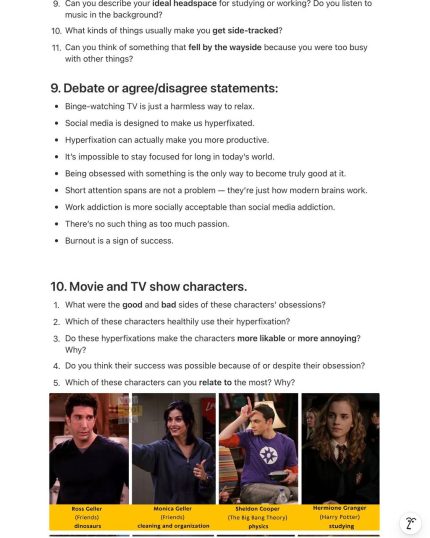
Hyperfixation and Attention
In this lesson, your students will:
- Share what they’re “hooked on” and reflect on their attention span situation.
- Discuss the concept of *hyperfixation* and predict its meaning.
- Focus on vocabulary through a short reading exercise.
- Explore three relatable stories and analyze people’s habits.
- Match quotes with characters, complete gap-fills, and do transformation tasks with target idioms.
- Discuss habits and distractions using idioms naturally in conversation.
- Reflect on statements about productivity, attention, and modern focus struggles.
- Connect the topic to pop culture, discussing movie/TV characters and their obsessions.
- Take the Attention Span Test and reflect on personal focus habits as homework.
This lesson includes 15 exercises that develop students’ ability to understand and discuss the concept of hyperfixation while learning natural, idiomatic expressions for talking about attention, distraction, and focus.

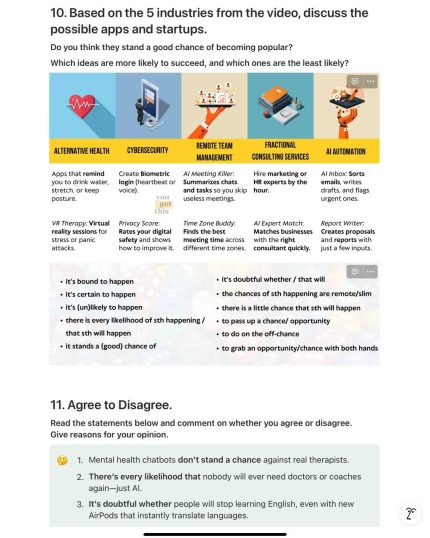
Startups. Chance and Probability
In this lesson, your students will:
-
- Read and retell startup dialogues using new probability expressions.
- Sort and unscramble chance-related phrases for accuracy and fluency.
- Make sentence transformations using target collocations in context.
- Watch a short authentic video and discuss trends in future business opportunities.
- Debate success vs. failure of unusual startup ideas
- Practice speaking about their own projects.
- Play a guessing game on real-life startup successes and failures.
- Reflect on their own chances and goals using the lesson’s vocabulary.
Vocabulary: on the off-chance, bound to happen, etc.
Additional resources: WordWall, LearningApps, Quizlet
This lesson includes 15 exercises that develop students’ ability to understand and accurately use a range of probability and chance expressions in spoken interaction through the engaging context of startup ideas.
Speaking: Overconsumption
In this speaking club, your students will:
-
- React to impactful photos and videos about consumerism and waste.
- Discuss ASMR “aesthetic” shopping/organization trends and their influence.
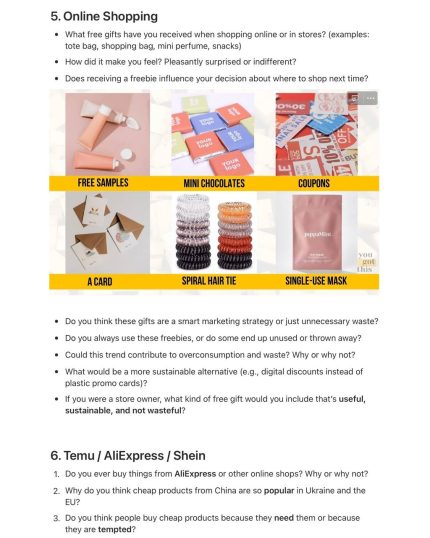
- Share experiences with online shopping, freebies, and cheap mass-market platforms.
- Analyze the impact of fast fashion and participate in mini-debates.
- Explore sustainable alternatives such as upcycling and eco-friendly habits.
- Compare shopping cultures in different countries and evaluate global practices.
- Identify their own “buyer type” and reflect on how advertising and social media affect them.
- Finish with reflecting on past shopping regrets and habits.
Where’s the line between smart consumption and wasteful habits? This lesson uses striking visuals, videos, and debates to get learners thinking about their own choices, while expanding their vocabulary and fluency around the theme of overconsumption.
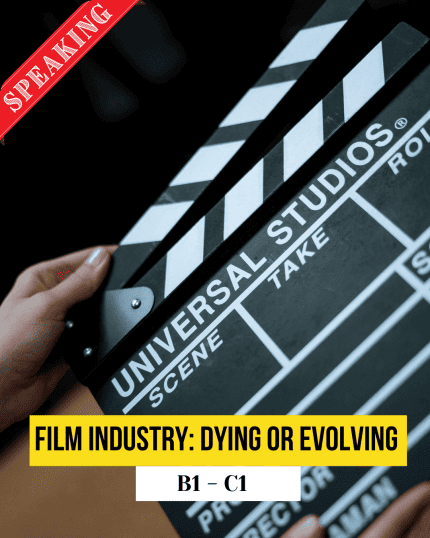
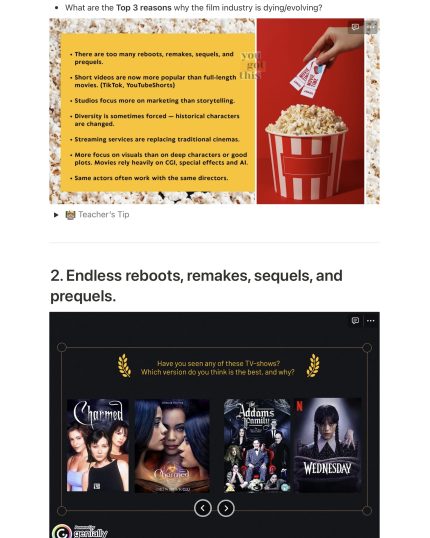
Speaking: Film Industry
In this speaking club, your students will:
- Dive into hot-button trends like TikTok, reboots, and CGI to debate whether the film industry is evolving or losing its spark
- Discuss how they feel about constant reboots, remakes, prequels and sequels.
- Debate the pros and cons of reboots, long vs short content, and streaming
- Discuss diversity and race-swapping in Hollywood and its cultural impact
- Analyze what makes an Oscar-worthy performance
Tired of the same old movie talk? This lesson dives deep into the real changes shaping today’s film industry — from TikTok to diversity debates and Oscar drama. Your students will explore what’s evolving, what’s collapsing, and what’s worth celebrating in modern cinema.

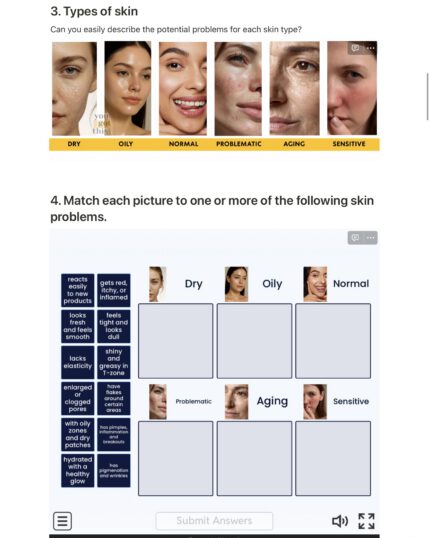
Skincare Routine
In this lesson, your students will:
- Learn key skincare-related vocabulary in context
- Understand and summarize a 5-step skincare routine
- Match product instructions to beauty items and discuss their use
- Reflect on their own habits and share opinions
- Compare natural aging and cosmetic procedures
- Debate ethical beauty issues like cruelty-free products and influencer marketing
- Drill personal skincare routine steps to be able to explain how beauty products work
This lesson includes up to 20 exercises that help students build vocabulary related to skincare steps, products, and ingredients, and practice giving personal opinions and discussing consumer choices.
Vocabulary: skincare steps, products, and ingredients
Additional resources: WordWall, Quizlet, Learning Apps

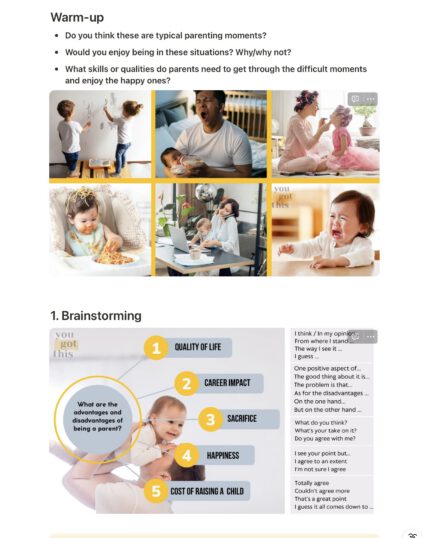
Speaking: Parenting
In this speaking club, your students will:
– Share reactions to typical parenting situations: both heartwarming and chaotic
– Learn and use key vocabulary related to parenting
– Explore cultural expectations of moms and dads, and reflect on shifting roles
– Talk through fun dilemma questions and challenging teen behaviors
– Discuss the emotional side of parenting shown in popular TV series
– Reflect on what kind of parent they are or could be, and what values matter most in raising a child

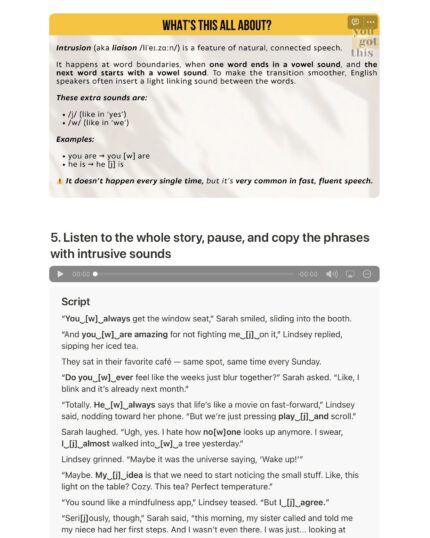
Pronunciation 2. Intrusion
In this lesson, your students will:
- Explore the topic of intrusion in connected speech
- Focus on audio decoding
- Learn to identify and detect intrusion through targeted listening activities
- Engage in various practice exercises
- Work with audio drills to polish pronunciation and listening accuracy
- Integrate the new material into speaking by discussing carefully designed conversation questions
This lesson contains 15 exercises to ensure maximum practice and build both awareness and confidence in real-life speech.
Features: intrusive /j/ and /w/ sounds in Connected Speech
Additional resources: Wordwall

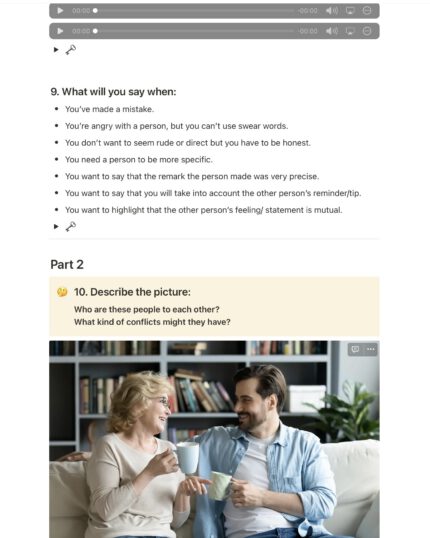
Quick Responses 2
In this lesson, your students will:
- Learn quick reaction phrases through fun, relatable dialogs.
- Practice in real-time with games, stories, and partner tasks.
- Notice certain pronunciation challenges.
- Personalize and use the phrases in realistic speaking challenges.
- Reflect, debate, and make new expressions stick naturally.
This lesson includes up to 20 interactive exercises to introduce and practice natural conversational responses in English so that students can react quickly and appropriately in informal situations.
Vocabulary: putting it lightly, give a break, duly noted, etc
Additional resources: LearningApps, Wordwall, Quizlet

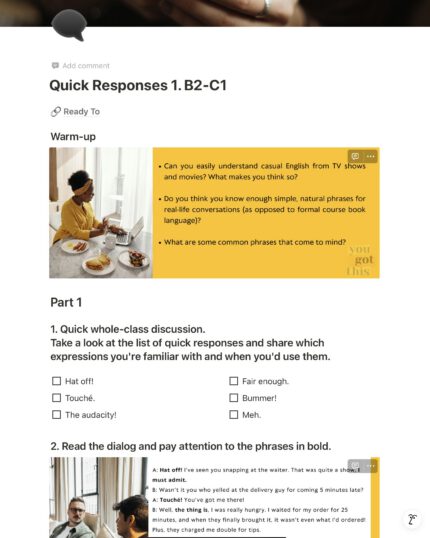
Quick Responses 1
In this lesson, your students will:
- Discover natural reaction phrases through real-life dialogues.
- Rephrase and personalize expressions to build confidence and retention.
- Practice reacting to fun, awkward, or surprising situations in pairs or groups.
- Act out conversations and take on quick-response speaking challenges.
- Reinforce key phrases with interactive games and pronunciation tasks.
- Reflect on personal experiences and apply new language in realistic contexts.
This lesson includes up to 20 interactive exercises to introduce and practice natural conversational responses in English so that students can react quickly and appropriately in informal situations.
Vocabulary: fair enough, audacity, that reminds me, etc
Additional resources: LearningApps, Wordwall, Quizlet
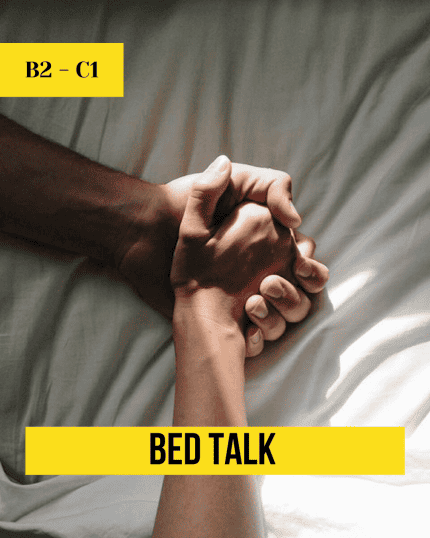
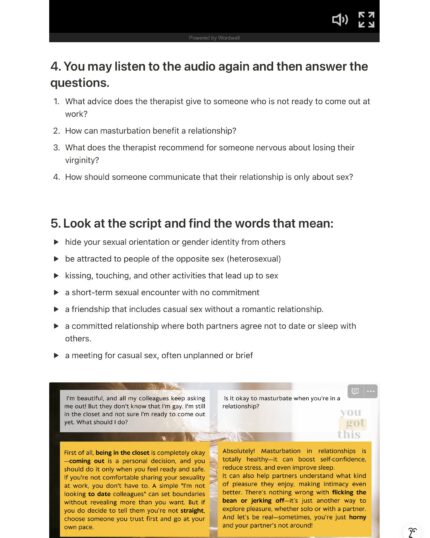
Bed Talk
This lesson covers essential making love vocab — fun, natural, and straight from movies, books, and real conversations.
In this lesson, your students will:
- Predict common issues raised with sex therapists to activate prior knowledge.
- Listen to real advice from a therapist and order the questions.
- Answer detailed comprehension questions.
- Learn euphemistic and slang vocabulary for discussing sexuality, identity, and intimacy.
- Discuss social and personal perspectives on identity disclosure, casual sex, and boundaries in modern relationships.
- Practice using the new vocabulary through matching, memory tasks, and dialog reconstruction.
- Reflect on personal attitudes and cultural norms through opinion-based speaking tasks.
This lesson contains 12 interactive exercises aimed at developing learners’ ability to understand and discuss common intimacy and relationship issues using natural, informal English vocabulary, including slang, euphemisms, and real-life expressions.
Vocabulary: friends with benefits, foreplay, booty call, etc
Additional resources: LearningApps, Wordwall
Speaking: Time
Step into a time-traveling conversation that sparks curiosity and deeper thinking. Let your students feel, reflect, and connect through their own perception of time. Dive into nostalgic memories and talk about the things you had as a kid — a Tamagotchi, a collection of hippos from Kinder Surprise?
Speaking Club Highlights
Time Theory: how we feel time vs. how we measure it
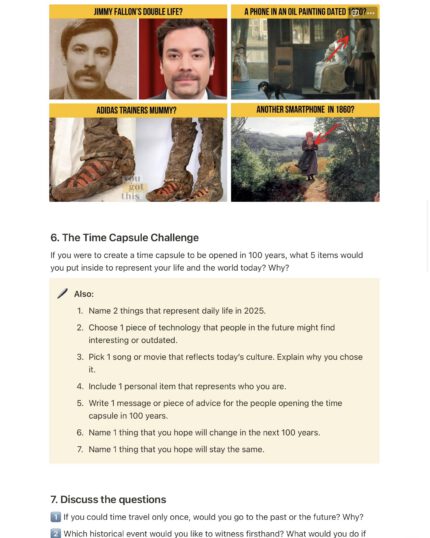
Truth or Trick?: debating viral time traveler photos
Time Capsule: what would you save for the future?
Nostalgia vs. Reminiscence: learning the difference
Childhood Memories: sharing and comparing experiences growing up
Movie Talk: time travel, memory, and mind-bending films
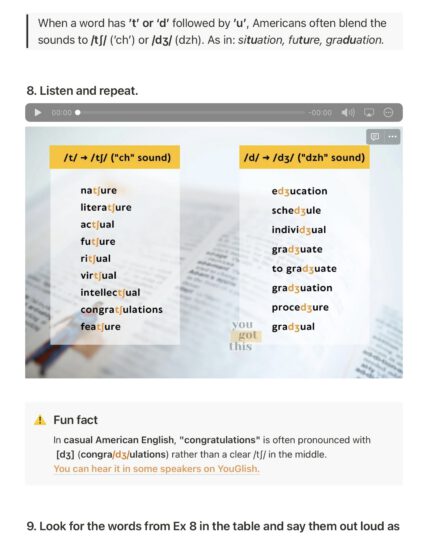
Pronunciation 1. Assimilation
In this lesson your students will:
- Have a good laugh in the warm-up section
- Tune their ears with audio dictation
- Decode “strange” spellings to reveal natural pronunciation patterns
- Practice tricky words with tr- and dr-
- Sort and categorize words by sound patterns in interactive tasks
- Act out mini-dialogues with blended phrases like don’t you → don/tʃu/
- Read a mysterious story while focusing on pronunciation in context
- Take on a homework challenge to spot real-world pronunciation
This lesson contains 12 interactive exercises that raise awareness of features of connected speech in American English and help improve the ability to recognize and produce these features in context.
Skills: American Pronunciation
Features: tr-, dr-, -tu-, /tʃ/, /dʒ/ in Connected Speech
Additional resources: Wordwall, LearningApps