

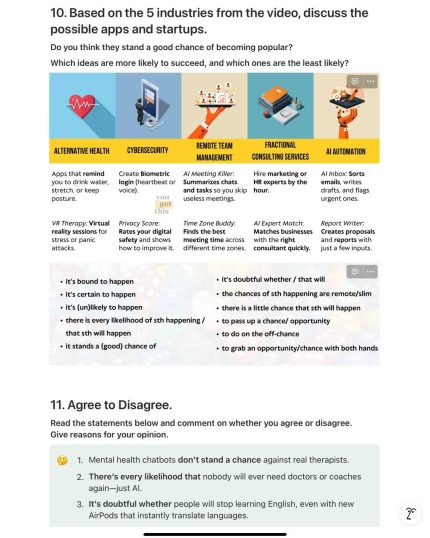
Startups. Chance and Probability
In this lesson, your students will:
-
- Read and retell startup dialogues using new probability expressions.
- Sort and unscramble chance-related phrases for accuracy and fluency.
- Make sentence transformations using target collocations in context.
- Watch a short authentic video and discuss trends in future business opportunities.
- Debate success vs. failure of unusual startup ideas
- Practice speaking about their own projects.
- Play a guessing game on real-life startup successes and failures.
- Reflect on their own chances and goals using the lesson’s vocabulary.
Vocabulary: on the off-chance, bound to happen, etc.
Additional resources: WordWall, LearningApps, Quizlet
This lesson includes 15 exercises that develop students’ ability to understand and accurately use a range of probability and chance expressions in spoken interaction through the engaging context of startup ideas.
Speaking: Overconsumption
In this speaking club, your students will:
-
- React to impactful photos and videos about consumerism and waste.
- Discuss ASMR “aesthetic” shopping/organization trends and their influence.
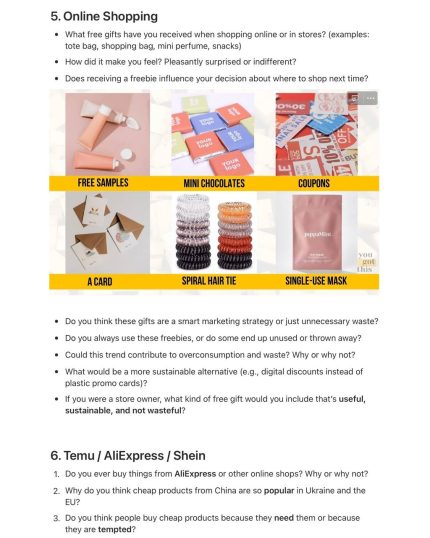
- Share experiences with online shopping, freebies, and cheap mass-market platforms.
- Analyze the impact of fast fashion and participate in mini-debates.
- Explore sustainable alternatives such as upcycling and eco-friendly habits.
- Compare shopping cultures in different countries and evaluate global practices.
- Identify their own “buyer type” and reflect on how advertising and social media affect them.
- Finish with reflecting on past shopping regrets and habits.
Where’s the line between smart consumption and wasteful habits? This lesson uses striking visuals, videos, and debates to get learners thinking about their own choices, while expanding their vocabulary and fluency around the theme of overconsumption.
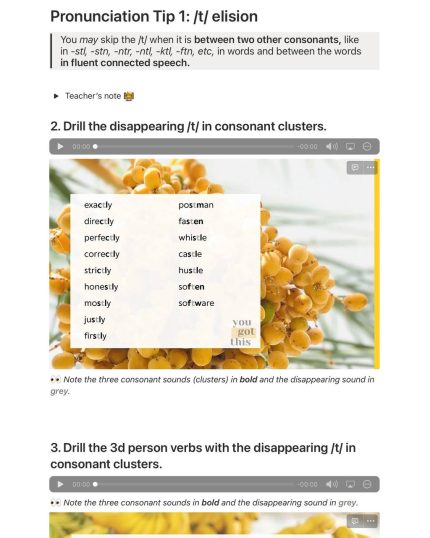
Pronunciation 5. Elision in clusters
In this lesson, your students will:
- Notice when /t/ and /d/ commonly drop in consonant clusters.
- Practice controlled drills of words and word combinations with elision.
- Spot and sort elision patterns in lists and Wordwall tasks.
- Improve listening discrimination through short dictations and “write what you hear” decoding.
- Paraphrase and produce high-frequency chunks with natural elision.
- Apply elision in timed speaking challenges and personalized prompts.
- Self-monitor pronunciation using keys that highlight potential vs. optional elision.
- Take home a ready-made audio drill for reinforcement.
- Realize the importance of noticing in accent acquisition
This lesson contains up to 15 interactive exercises that develop learners’ perception and production of /t/ and /d/ elision in connected speech—both within consonant clusters and across word boundaries—so that students can recognize these reduced forms in authentic listening and apply them accurately and confidently in their own speech.

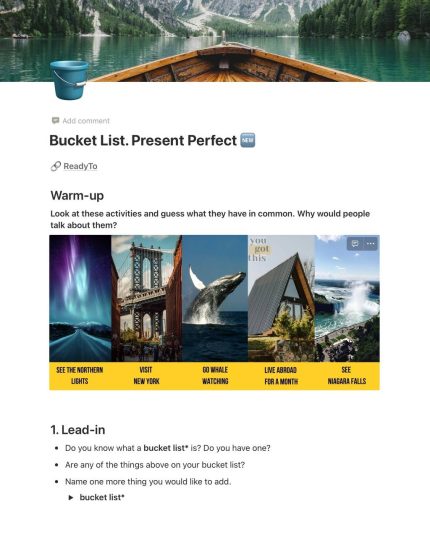
Bucket List. Present Perfect
In this lesson, your students will:
-
- Explore the idea of a bucket list and share their own dream experiences.
- Listen to and watch short clips about travel and life goals.
- Practice Present Perfect (ever/never) vs. Past Simple in personal contexts.
- Drill forms with already and yet through controlled and semi-controlled practice.
- Use superlatives + ever to talk about “the best/worst” life experiences.
- Reflect on their own achievements and future goals in meaningful conversations.
- Create their own bucket list challenge and present it to the group.
- Use ready-made audio-drill as homework practice.
This lesson includes up to 30 exercises that give learners confidence using the Present Perfect and Past Simple to talk about life experiences and bucket list goals, while making grammar practice meaningful, memorable, and personally relevant.
Grammar: Past Simple vs. Present Perfect / Present Perfect with ever/never, already/yet, superlative adjectives
Additional resources: Quizlet

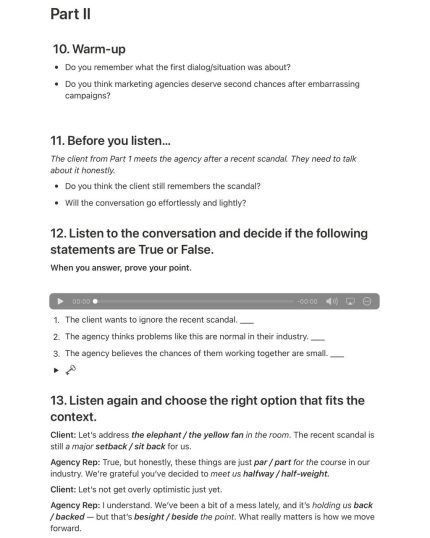
Business Idioms 2. Talking about problems
In this lesson, your students will:
- Reflect on their own experiences with problems at work
- Read and analyze a business dialogue, identifying how speakers express their views
- Explore idioms with guided comprehension questions
- Practice substituting idioms in a dialogue
- Roleplay workplace problem scenarios and decide which strategies would be effective or ineffective
- Listen to an authentic-style business dialogue and check comprehension
- Do controlled matching, sentence completion, and gapped paraphrasing activities
- Personalize idioms by finishing open-ended prompts
- Work in groups to prepare and present a short pitch
This lesson includes 20 exercises that help learners understand and use a range of business idioms for describing problems, risks, and solutions in workplace contexts in order to communicate more naturally and effectively about challenges and strategies in professional settings.
Vocabulary: sweep under the rug, turn things around, at stake, etc.
Additional resources: WordWall, LearningApps, Quizlet
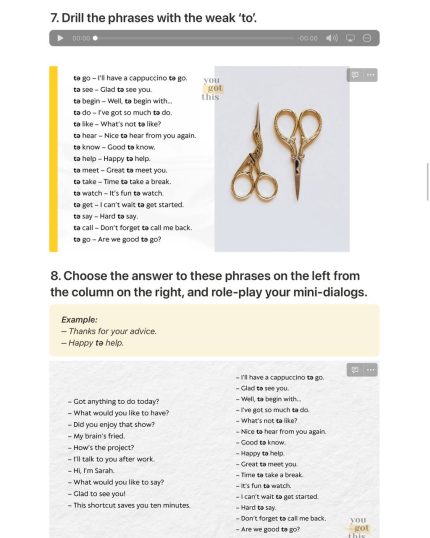
Pronunciation 4. Reduction
In this lesson, your students will:
- Discover the difference between careful and fast connected speech.
- Identify content words and function words in sentences.
- Learn and practice the weak and strong forms of certain prepositions and articles.
- Listen for reduced function words in authentic speech extracts.
- Drill sentences with reduction patterns.
- Roleplay short dialogues using weak forms naturally.
- Discuss personal questions while applying reductions.
- Complete a project task using an authentic speech extract.
- Practice and record themselves to receive feedback.
This lesson contains up to 20 interactive exercises that raise learners’ awareness of weak forms in connected American English speech and give them practice in recognizing, producing, and using these reductions in meaningful contexts, so that their spoken English sounds more natural, fluent, and easy to understand.
Features: Reduction of Function Words in Connected Speech
Additional resources: Wordwall, LearningApps
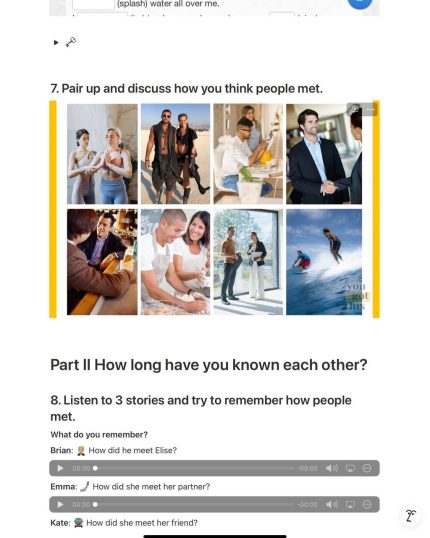
How we met. Past Simple vs Continuous. Present Perfect
In this lesson, your students will:
- reflect on important people in their lives and share impressions
- predict and listen to stories of how real couples met
- sort and analyze sentences to discover Past Simple vs. Past Continuous
- complete gap-fill exercises to practice both tenses in context
- drill and ask/answer short questions using substitution prompts
- explore Present Perfect with for and since through guided discovery
- play oral drill games with Q&A patterns
- write and personalize their own sentences with target structures
- use role cards to ask and answer about people they know
This lesson includes 15+ exercises to help students become better able to narrate past experiences using Past Simple and Past Continuous and talk about relationships using Present Perfect with for/since.
Grammar: Past Simple vs. Past Continuous. Present Perfect with for/since
Additional resources: WordWall, LearningApps, Quizlet

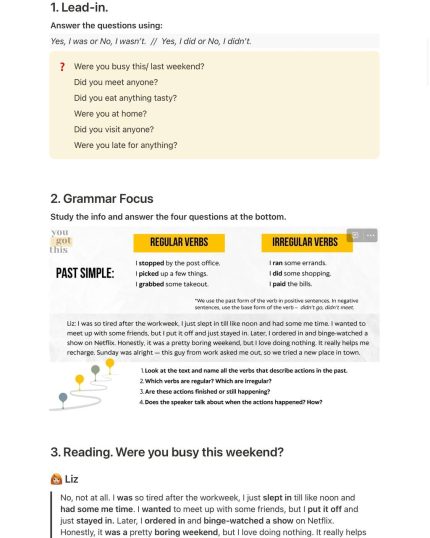
Busy Weekend. Past Simple
In this lesson, your students will:
- choose and compare weekend activities they consider fun or boring
- answer and ask simple Past Simple questions about their weekend
- read short personal weekend stories
- drill collocations and their past forms
- paraphrase sentences using target collocations in Past Simple
- make and ask detailed follow-up questions about weekend activities
- discuss and reflect on their own preferences
- explore a list of high-energy and low-energy weekend activities
- practice prepositions of place through listening, sorting, and speaking tasks
This lesson includes 15+ exercises that develop learners’ ability to talk about past weekend activities using Past Simple forms, common collocations, and functional phrases for sharing and asking about personal experiences.
Grammar: Past Simple for states and actions, irregular verbs. Bonus: prepositions of place
Vocabulary: binge-watch a show, hit a bar, fill up the car, etc.
Additional resources: WordWall, Quizlet
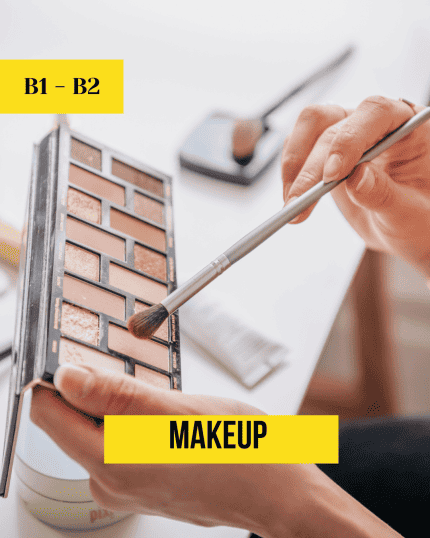
Makeup
In this lesson, your students will:
- Identify and label makeup areas on the face
- Learn the names of brushes and what they’re used for
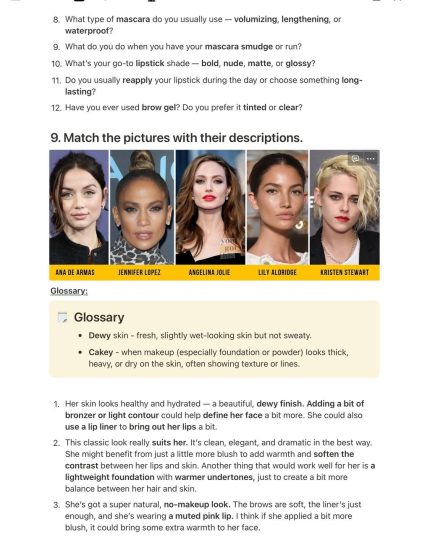
- Describe makeup looks from photos and give suggestions
- Compare celebrity styles and discuss their impact
- Reflect on their own attitudes toward beauty and self-expression
- Watch and analyze videos featuring celebs
- Pick up tons of modern vocabulary they’ll actually want to use
Vocabulary: dab on some foundation, go full glam, etc.
Additional resources: WordWall, Quizlet
This lesson includes 15+ exercises that develop students’ speaking fluency and confidence when discussing makeup routines, products, and personal opinions about beauty using appropriate lexical chunks and collocations.
Business Idioms 1. Marketing & Project Stages
In this lesson, your students will:
– explore business idioms with their meanings and contexts
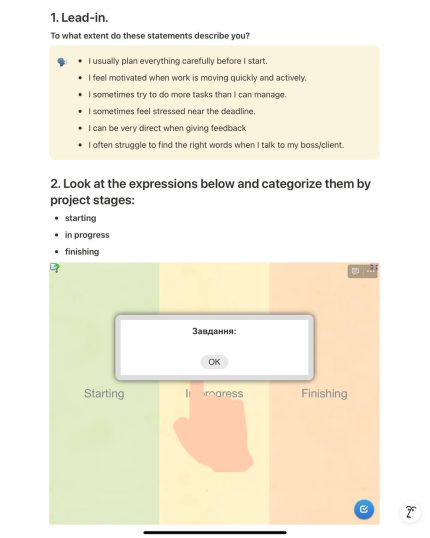
– reflect on project scenarios and their life cycle
– categorize expressions by project stages
– test comprehension through listening and guided exercises
– paraphrase business sentences using the new idioms
– play speaking games to reinforce fluency
– identify tricky client types and how to manage them
– analyze and retell a dialogue through guided discovery and prompts
– complete revision tasks and personalize the idioms
This lesson includes up to 20 exercises that develop learners’ ability to understand and use business idioms and expressions related to project work fluently and appropriately in spoken communication.
Level: B1, B2
Vocabulary: kick off, wiggle room, in full swing, etc.
Additional resources: WordWall, LearningApps, Quizlet
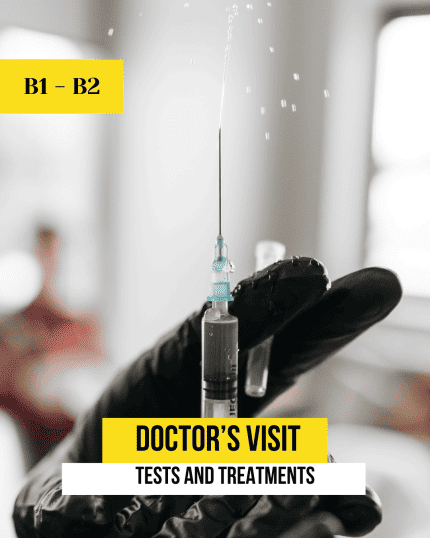
Doctor’s Visit: Tests and Treatments
In this lesson, your students will:
- Reflect on doctor–patient communication styles
- Generate and listen to typical GP questions and practice writing and responding to them
- Explore key collocations with medical vocabulary and their meanings and real-life use
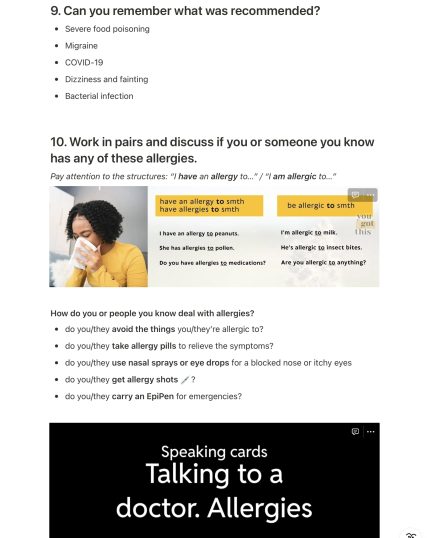
- Study the ways to talk about allergies
- Role-play a simple doctor visit using a model dialogue
- Practice phrases used at the pharmacy
- Compare healthcare systems and reflect on cultural differences
- Expand vocabulary on tests, medications, and health issues
This lesson includes 13 exercises that work together to expand students’ vocabulary related to symptoms, medical tests, and treatment, and build students’ confidence in using collocations and set phrases when discussing health issues.
Functional language: ”Are you in any pain?”, “Any history of illness in your family?”, etc.
Vocabulary: be allergic to, get an X-ray, etc.
Additional resources: WordWall, LearningApps, Quizlet
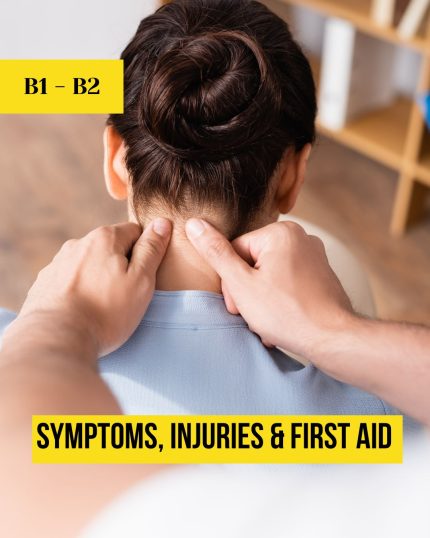
Symptoms, Injuries & First Aid
In this lesson, your students will:
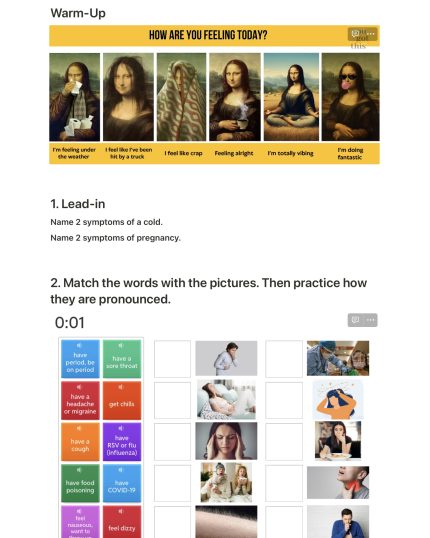
- Learn key illness-related words and make up commonly used health-related word combinations
- Listen to health complaints and guess the symptoms
- Compare flu, RSV, and COVID-19 symptoms by fact-checking them with a video
- Complete a natural conversation discussing sick leave
- Share personal habits and compare how they deal with common problems
- Take a side and argue whether certain health myths are true or false
- Find and learn useful expressions for symptoms, first aid, and emergencies
- Learn about basic first aid programs and test their instincts in emergency scenarios
This lesson includes up to 20 exercises that recognize, describe, and discuss common symptoms and health issues using relevant vocabulary.
Vocabulary: come down with a cold, get chills, perform CPR, etc.
Additional resources: WordWall, LearningApps, Quizlet